From Engineering Intent to First Silicon: Where AI Shortens Semiconductor Iteration
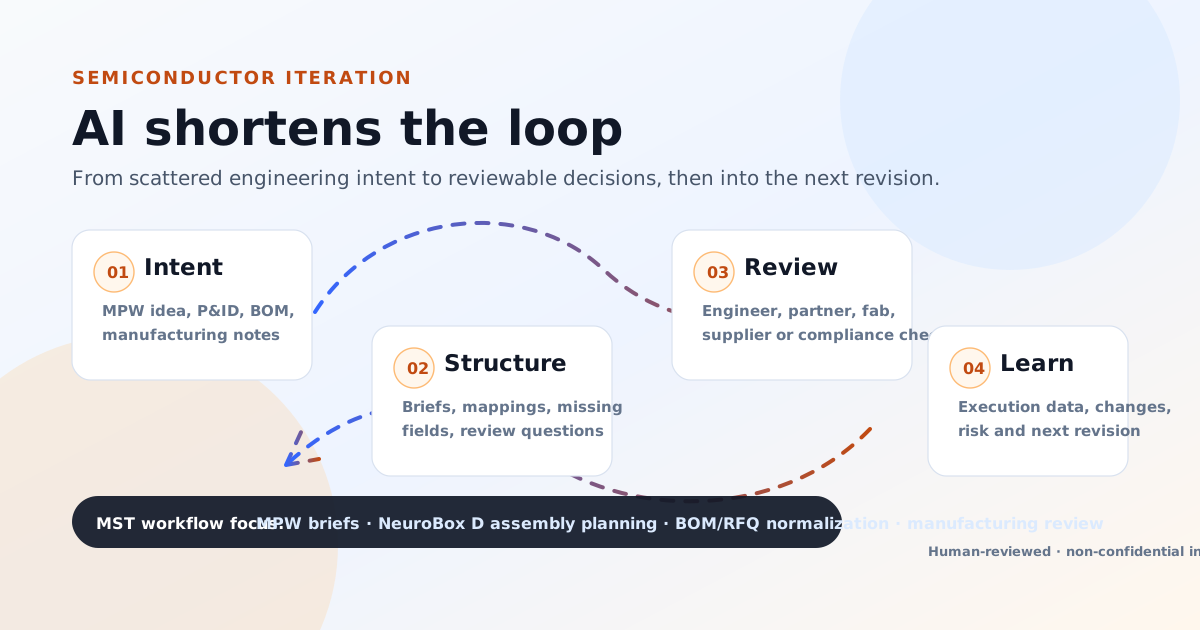
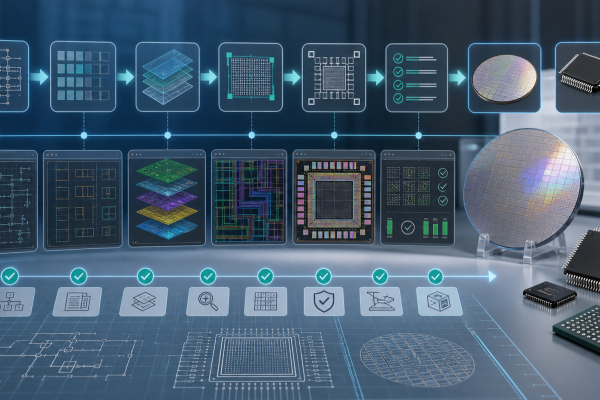
AI creates the most value in semiconductor work when it turns scattered engineering inputs into reviewable decisions before MPW, equipment design, RFQ preparation and manufacturing review.
- →The bottleneck is often translation, not intelligence
- →Loop 1: MPW before the foundry review
- →Loop 2: Equipment design before mechanical rework
- →Loop 3: RFQ preparation before supplier outreach
- →Loop 4: Manufacturing data before the next engineering decision
AI is often discussed as a demand driver for semiconductors: larger models need more compute, more memory bandwidth, better packaging and more efficient power delivery. That story is real, but it is only one side of the loop.
The other side is more practical for engineering teams: AI can shorten how fast a semiconductor idea moves from unclear intent to a reviewable decision, then from that decision to the next engineering revision. In that role, AI is not the product by itself. It is a workflow layer that helps engineers prepare better inputs, catch missing information earlier and preserve what was learned after each review.
The bottleneck is often translation, not intelligence
Many semiconductor projects slow down before the hardest technical work begins. A fabless team asks about MPW without a complete brief. A semiconductor equipment OEM has a P&ID, a BOM and a part library, but the mechanical assembly work still depends on manual interpretation. A buyer sends a messy spreadsheet and drawings, but suppliers cannot quote because manufacturer, quantity, revision or test assumptions are unclear. A process team has DOE, metrology, alarm and yield notes, but the next action is hidden across files and meetings.
These are translation problems. Engineering intent exists, but it is not yet in a form that another team can review, quote, route or execute. That is where AI can matter.
Loop 1: MPW before the foundry review
An early MPW request does not usually fail because the team lacks ambition. It fails because the first message is not yet reviewable. The node is vague, the process family is missing, the die-size estimate is not stated, package and test assumptions are absent, or the team is unsure when GDS, PDK and NDA should enter the process.
AI can help before sensitive design files move. It can turn a free-form request into a non-confidential first brief: target node or node range, process family, die-size estimate, sample quantity, package/probe/test assumptions, schedule window, customer country or region, end-use context and current NDA/PDK status.
For MST, this is the purpose of a no-GDS MPW intake path. The output is not a guaranteed slot or a price. The output is a cleaner first-screening package that a human reviewer can route toward a qualified partner or fab-confirmed path.
Loop 2: Equipment design before mechanical rework
In semiconductor equipment, the gap between process intent and mechanical assembly is expensive. A P&ID may show the gas path, valves, instruments and tags, but the 3D assembly also needs BOM context, customer part-library rules, connection standards, space constraints, service access and reviewable mate logic.
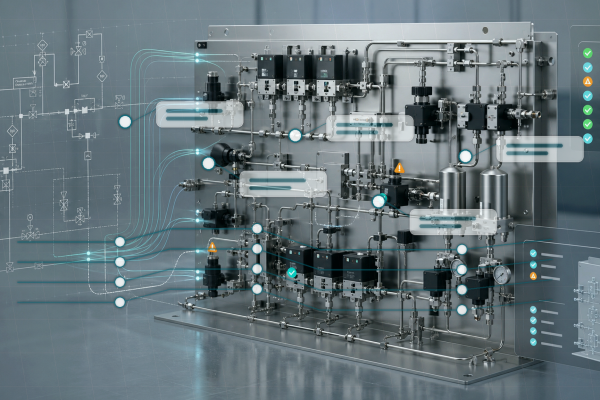
AI can reduce the repetitive translation work between these artifacts. It can read the P&ID structure, normalize tags, connect BOM fields to a customer part library, flag missing connection rules and prepare an assembly plan before a mechanical engineer commits time to modeling.
That is how MST positions NeuroBox D: not as a magic drawing converter, but as AI-assisted P&ID-to-native-SOLIDWORKS assembly intelligence for semiconductor equipment makers. The useful output is a reviewable 3D layout and command plan, with engineering approval still in the loop.
Loop 3: RFQ preparation before supplier outreach
Industrial sourcing also suffers from the same problem. A buyer may know what they need, but the supplier sees missing manufacturer names, ambiguous quantities, unclear drawings, inconsistent descriptions or no logistics context. The result is either no quote, a wrong quote or a long chain of clarification emails.
AI can normalize the RFQ package before outreach. It can identify missing fields, group comparable parts, separate drawing-based items from catalog items, flag substitution risk and produce a supplier-ready question list. This does not replace commercial negotiation; it makes the first quote request less wasteful.
Loop 4: Manufacturing data before the next engineering decision
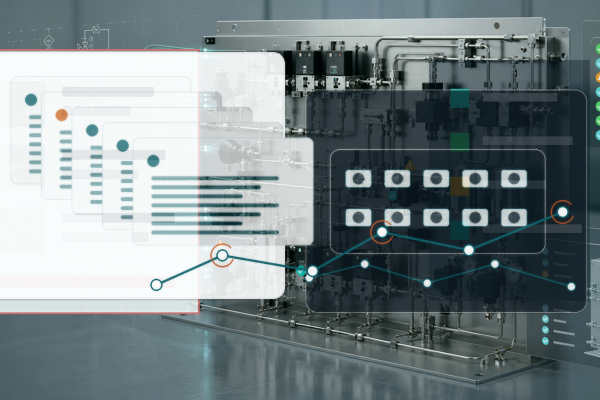
After a run, a pilot or a production change, the value of data depends on whether the team can turn it into the next decision. Smart DOE, virtual metrology, run-to-run review, OEE notes and alarm history can all help, but only if the assumptions, limits and exceptions are visible.
AI can summarize what changed, what improved, where data is thin and which next experiment or engineering review is justified. The boundary matters: process ownership remains with engineers. AI should organize evidence and propose review questions; it should not quietly replace process sign-off.
What remains human
The uniquely human part is not typing the first draft of a brief. It is deciding what risk is acceptable, which process route is appropriate, whether a customer can move sensitive files, how to interpret a conflict between model output and engineering experience, and when a project is not ready to proceed.
In semiconductor work, AI should be strongest at preparation and memory: turning scattered inputs into reviewable packages, preserving decisions, comparing revisions and making the next review faster. The authority still belongs to engineering, commercial and compliance owners.
How MST applies this
MST is building this workflow layer across three practical paths:
- MPW and prototype silicon: non-confidential MPW briefs, readiness checks, package/test scope, NDA/PDK path preparation and partner-review packets.
- Semiconductor equipment design: NeuroBox D for P&ID understanding, BOM/tag mapping, customer part-library context, spatial constraints and native SOLIDWORKS assembly planning.
- RFQ sourcing: BOM and drawing normalization so suppliers receive clearer questions and buyers reduce wasted clarification cycles.
The common idea is simple: shorten the distance between engineering intent and a decision that another qualified party can review.
Review the MST MPW coordination path, see the NeuroBox D P&ID-to-3D capability, or contact MST with a non-confidential brief.
Related Articles
Ready to scope your run?
Send node, process family, die area, volume and timeline - no design IP. We screen it, route to a qualified partner, and return an indicative quote.