
From Prompting to Loop Engineering: Why Semiconductor AI Needs Review Loops
Loop engineering is a better frame for semiconductor AI than one-shot prompting: MPW RFQs, P&ID-to-3D assembly, BOM sourcing and manufacturing review all need repeatable, human-reviewed loops.
- →Why one-shot prompting breaks down in semiconductor work
- →What loop engineering means in practice
- →Loop 1: MPW RFQ before GDS moves
- →Loop 2: P&ID-to-3D before mechanical rework
- →Loop 3: BOM and RFQ before supplier outreach
Loop engineering is becoming a useful way to describe the next stage of AI work. The point is not that prompts no longer matter. The point is that a single prompt is rarely enough when the task has to be repeated, checked, revised and trusted by a real engineering organization.
That distinction matters in semiconductors. A fabless team cannot send one vague message and expect an MPW route, a price, a schedule and a PDK path to become clear. A semiconductor equipment maker cannot ask AI to “convert this P&ID into 3D” and skip BOM context, customer part-library rules, gas-stick constraints, interface checks and mechanical review. A sourcing team cannot paste a messy BOM and assume suppliers can quote correctly. A process team cannot accept a model suggestion without evidence, limits and sign-off.
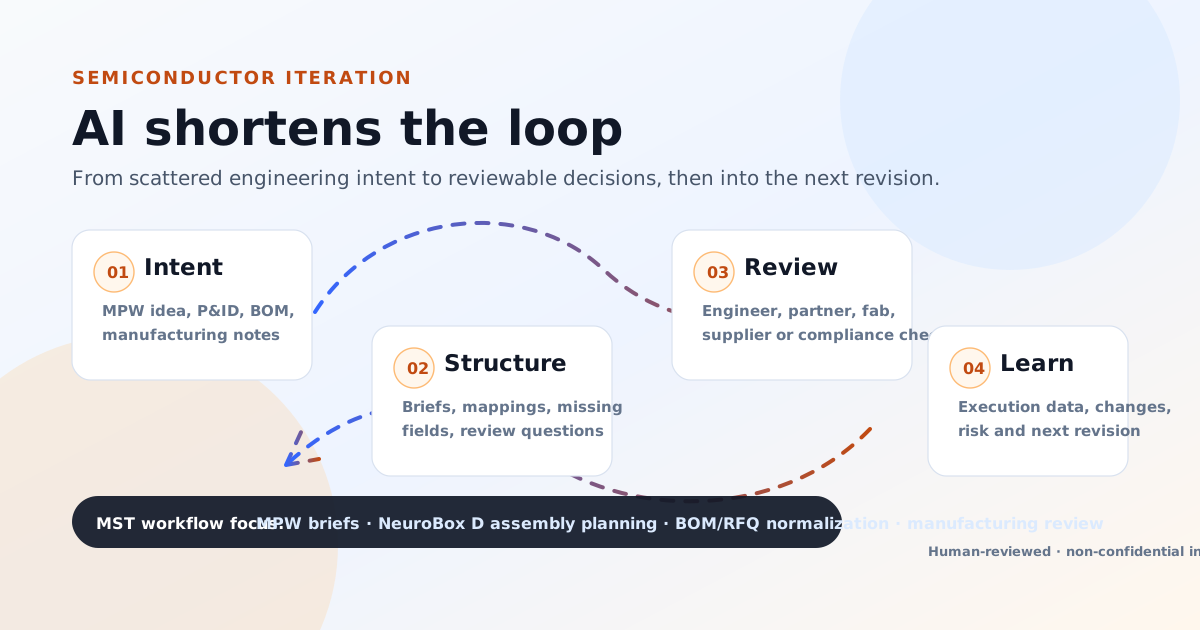
For semiconductor work, the useful unit is not a one-shot answer. It is a review loop: gather the input, structure it, check what is missing, route it to the right reviewer, capture the decision, then use that decision to improve the next pass.
Why one-shot prompting breaks down in semiconductor work
Prompting is strongest when the output can be judged quickly: a paragraph, a summary, a translation or a first draft. Semiconductor workflows are different. They involve constraints that are easy to miss and expensive to correct later: design-IP boundaries, NDA and PDK access, export and end-use screening, package/test assumptions, engineering ownership, supplier quote readiness, CAD validation and process sign-off.
The problem is not that AI lacks words. The problem is that the first answer is rarely the final artifact. A first MPW answer has to become a non-confidential RFQ brief. A P&ID interpretation has to become a reviewable assembly plan. A BOM cleanup has to become a supplier-ready RFQ package. A manufacturing-data summary has to become an engineering decision with evidence and boundaries.
That is why loop engineering is a better mental model: AI should help move work through controlled checkpoints instead of pretending that a fluent answer is already a release-ready decision.
What loop engineering means in practice
In practical terms, a loop has six parts:
- Input boundary: define what is safe and useful to submit first.
- Structure: turn scattered text, tables or drawings into fields another team can review.
- Gap check: identify missing assumptions, contradictions and risk flags.
- Human review: route the package to an engineer, commercial owner, compliance reviewer, supplier or partner.
- Decision capture: preserve what was confirmed, rejected or deferred.
- Next pass: use the decision to prepare the next RFQ, assembly revision, supplier question or process review.
Recent AI research is moving in this direction. Work on loop-style execution, prompt reliability and physics-in-the-loop CAD all points to the same operating principle: reliable AI systems need repeatable checks, deterministic steps where possible, and explicit validation signals. That is close to how engineering teams already work.
Loop 1: MPW RFQ before GDS moves
Many early MPW requests stall because the first inquiry is not reviewable. The customer may know the application but not the process family. The node may be a wish, not a validated option. Die size, samples, package, wafer probe, final test, country, end use, tapeout timing and PDK/NDA status may be scattered across emails or not stated at all.
A useful AI loop should not ask for GDS first. It should help prepare a non-confidential first brief:
- target node or acceptable node range;
- process family, such as analog, mixed-signal, RF, high-voltage, BCD, sensor or eNVM-related needs;
- rough die-area estimate and sample target;
- package, wafer-probe and final-test assumptions;
- customer country or region and end-use context;
- NDA, PDK, DRC/LVS and GDS status;
- timeline and what decision the customer needs next.
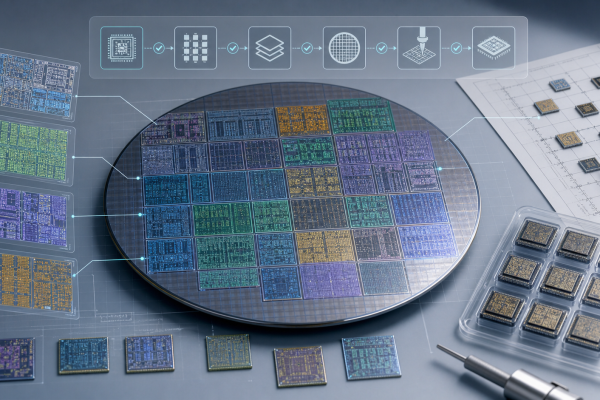
The output is not a guaranteed slot, price or schedule. The output is a cleaner packet for human review and partner-confirmed next steps. This is where MST’s MPW Desk is intentionally positioned: a no-GDS public intake, readiness checking, package/test scoping, NDA/PDK path preparation and partner-review packet creation before sensitive files move.
Loop 2: P&ID-to-3D before mechanical rework
For semiconductor equipment makers, P&ID-to-3D is not a drawing conversion problem. The hard part is context. A P&ID shows process intent, tags and flow relationships. A native SOLIDWORKS assembly also needs BOM alignment, customer-approved part libraries, fitting and valve constraints, gas-stick layout assumptions, spatial envelopes, mates, service access, manufacturability review and release control.
A loop-engineered CAD workflow should not stop at “generate a model.” It should move through structured checkpoints:
- read P&ID symbols and tags;
- map tags to BOM rows and customer part-library candidates;
- flag missing interfaces, sizes, materials, standards and review rules;
- prepare a 3D layout and assembly-command plan;
- surface exceptions for mechanical engineering review;
- record corrections so the next assembly pass improves.
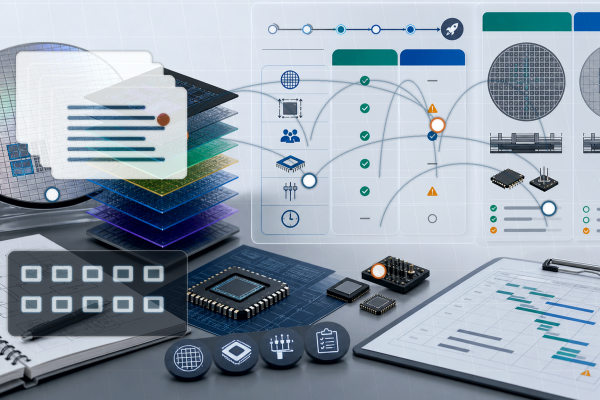
This is the working frame for NeuroBox D. The value is not “AI replaces mechanical engineers.” The value is reducing repetitive translation work between P&ID, BOM, part libraries and reviewable native SOLIDWORKS assembly planning, while keeping engineer approval in the loop.
Loop 3: BOM and RFQ before supplier outreach
Industrial RFQs fail quietly when suppliers cannot quote. A buyer may send a spreadsheet with part descriptions, drawings and quantities, but manufacturer names, revisions, materials, tolerances, certificates, alternates, delivery terms or end-use context may be missing. The supplier either guesses, refuses to quote or sends back a long list of clarification questions.
A sourcing loop uses AI before supplier outreach. It normalizes part rows, detects missing fields, groups comparable items, separates catalog parts from drawing-based parts, flags substitution risk and produces a question list. The commercial decision remains human. The loop simply makes the first RFQ package less wasteful.
Loop 4: Manufacturing data before the next process decision
Manufacturing data has the same pattern. Smart DOE, virtual metrology, run-to-run review, OEE, alarms, metrology and yield notes only help if they become a next engineering question. AI can summarize what changed, what evidence is thin, which exceptions matter and what should be reviewed next.
But the boundary is important. Process ownership stays with engineering teams. AI should organize evidence and propose review questions; it should not silently replace process sign-off, customer acceptance or production release controls.
Where the human stays in control
Loop engineering does not remove the human. It changes where human judgment is used. Engineers should spend less time retyping scattered inputs and more time deciding whether a route is technically valid, whether a rule exception is acceptable, whether a design package is ready, whether a supplier answer is credible and whether the next process change is justified.
For MST, that is the practical meaning of AI in semiconductor engineering. AI is a preparation and review-loop layer. Engineers, partners, fabs, suppliers and compliance owners remain the decision makers.
How to start a review loop with MST
If your team is preparing an MPW RFQ, a NeuroBox D pilot or an engineering sourcing request, start with a non-confidential brief. Do not send GDS, RTL, netlists, PDK files, customer rulepacks or confidential drawings through a public intake.
Send the high-level scope first. MST can help turn it into a reviewable package: an MPW first brief, a P&ID-to-3D pilot intake, a BOM/RFQ cleanup, or a manufacturing-review question list.
Review the MST MPW coordination path, see the NeuroBox D P&ID-to-3D capability, or contact MST with a non-confidential brief.
References
- Good to Go: The LOOP Skill Engine That Hits 99% Success and Slashes Token Usage by 99% via One-Shot Recording and Deterministic Replay
- PRISM: Prompt Reliability via Iterative Simulation and Monitoring for Enterprise Conversational AI
- Physics-in-the-Loop: A Hybrid Agentic Architecture for Validated CAD Engineering Design
Related Articles

Need a native SOLIDWORKS assembly?
Send the P&ID scope, part-library expectations, rulepack boundary and target assembly output. MST reviews whether the case is suitable for native assembly generation with feature tree, mates and BOM context.