
Del prompting al loop engineering: por qué la IA de semiconductores necesita ciclos revisables
Loop engineering es un marco mejor que un prompt único para MPW, P&ID-to-3D, BOM/RFQ y revisión de fabricación: cada flujo necesita ciclos repetibles con revisión humana.
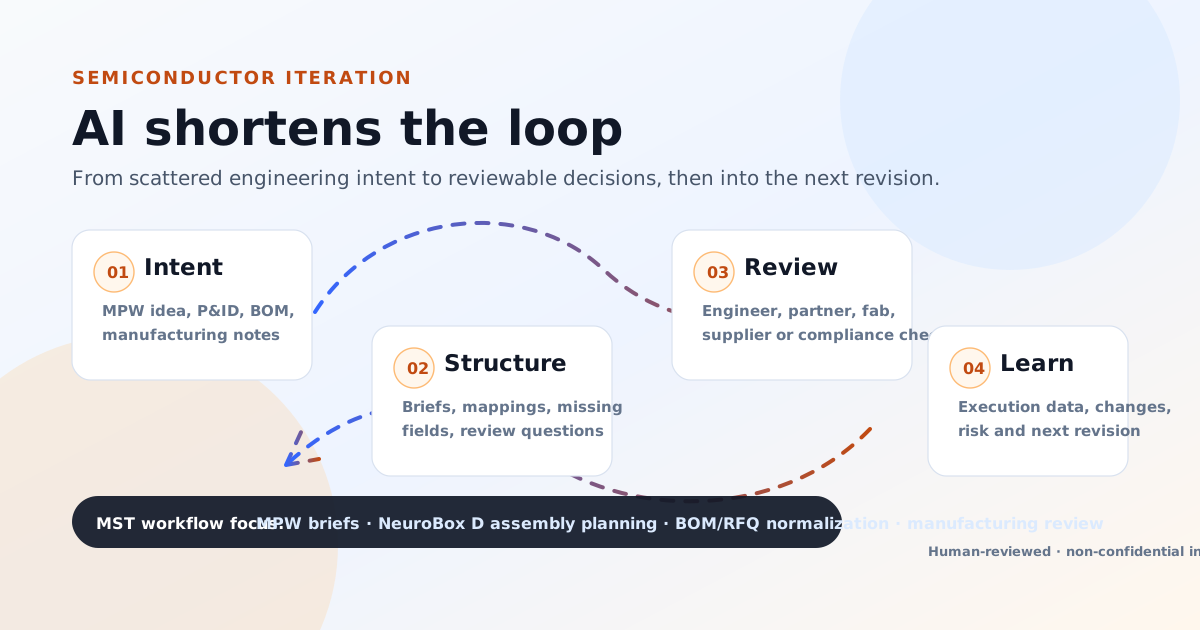
- →MPW before GDS moves
- →P&ID-to-3D before mechanical rework
- →BOM/RFQ before supplier outreach
- →Manufacturing data before the next decision
Loop engineering is a useful way to describe the next stage of practical AI work. A single prompt may produce a first answer, but engineering teams need a repeatable loop: structure the input, check gaps, route it for human review, capture the decision and improve the next pass.
In semiconductors, this matters because the cost of a wrong shortcut is high. MPW, P&ID-to-3D assembly, RFQ sourcing and manufacturing review all involve controlled files, missing assumptions, partner review and engineering sign-off.
MPW before GDS moves
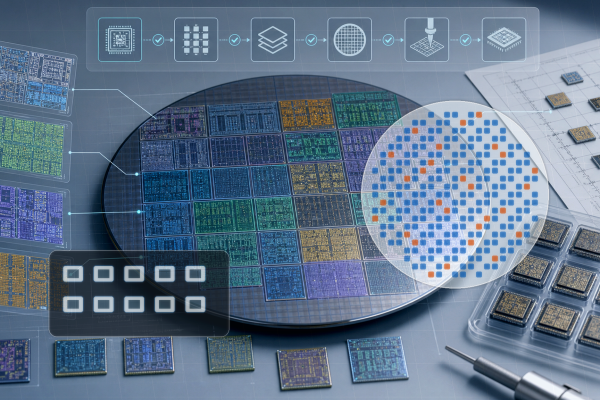
A useful MPW AI loop should not ask for GDS first. It should prepare a non-confidential brief with node range, process family, die-area estimate, sample quantity, package/test assumptions, timeline, country/end-use context and NDA/PDK status. The result is not a guaranteed slot or price; it is a cleaner package for human review and partner-confirmed next steps.
P&ID-to-3D before mechanical rework
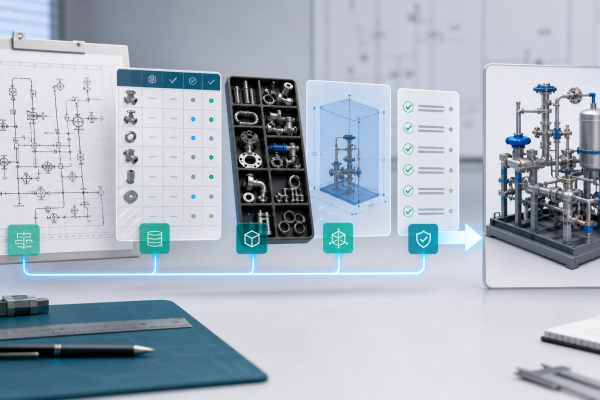
For semiconductor equipment makers, P&ID-to-3D is not just drawing conversion. A native SOLIDWORKS assembly needs BOM context, customer part libraries, connection rules, gas-stick constraints, spatial assumptions and engineering approval. NeuroBox D applies AI-assisted P&ID understanding to prepare a reviewable assembly plan, not to replace mechanical engineers.
BOM/RFQ before supplier outreach
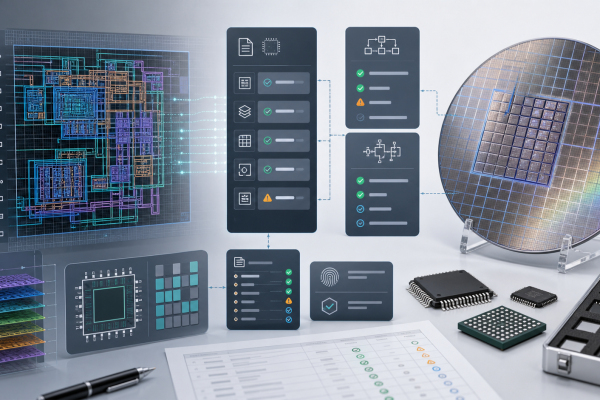
A sourcing loop can normalize messy BOM rows, detect missing manufacturer or revision fields, separate catalog and drawing-based parts, flag substitution risk and create a supplier-ready question list. The commercial decision remains human.
Manufacturing data before the next decision
Smart DOE, virtual metrology, R2R, OEE and alarm history only help when they become the next engineering question. AI can organize evidence and boundaries; process sign-off remains with engineering owners.
MST applies this review-loop approach across MPW coordination, NeuroBox D and RFQ sourcing. Start with a non-confidential brief; do not send GDS, PDK files, rulepacks or confidential drawings through a public intake.
Related Articles
Need a native SOLIDWORKS assembly?
Send the P&ID scope, part-library expectations, rulepack boundary and target assembly output. MST reviews whether the case is suitable for native assembly generation with feature tree, mates and BOM context.