
What Is MPW in Semiconductor? Tapeout to First Silicon
MPW combines multiple chip designs on a shared wafer run. Learn when it fits, what affects cost and schedule, and what to prepare before first silicon.
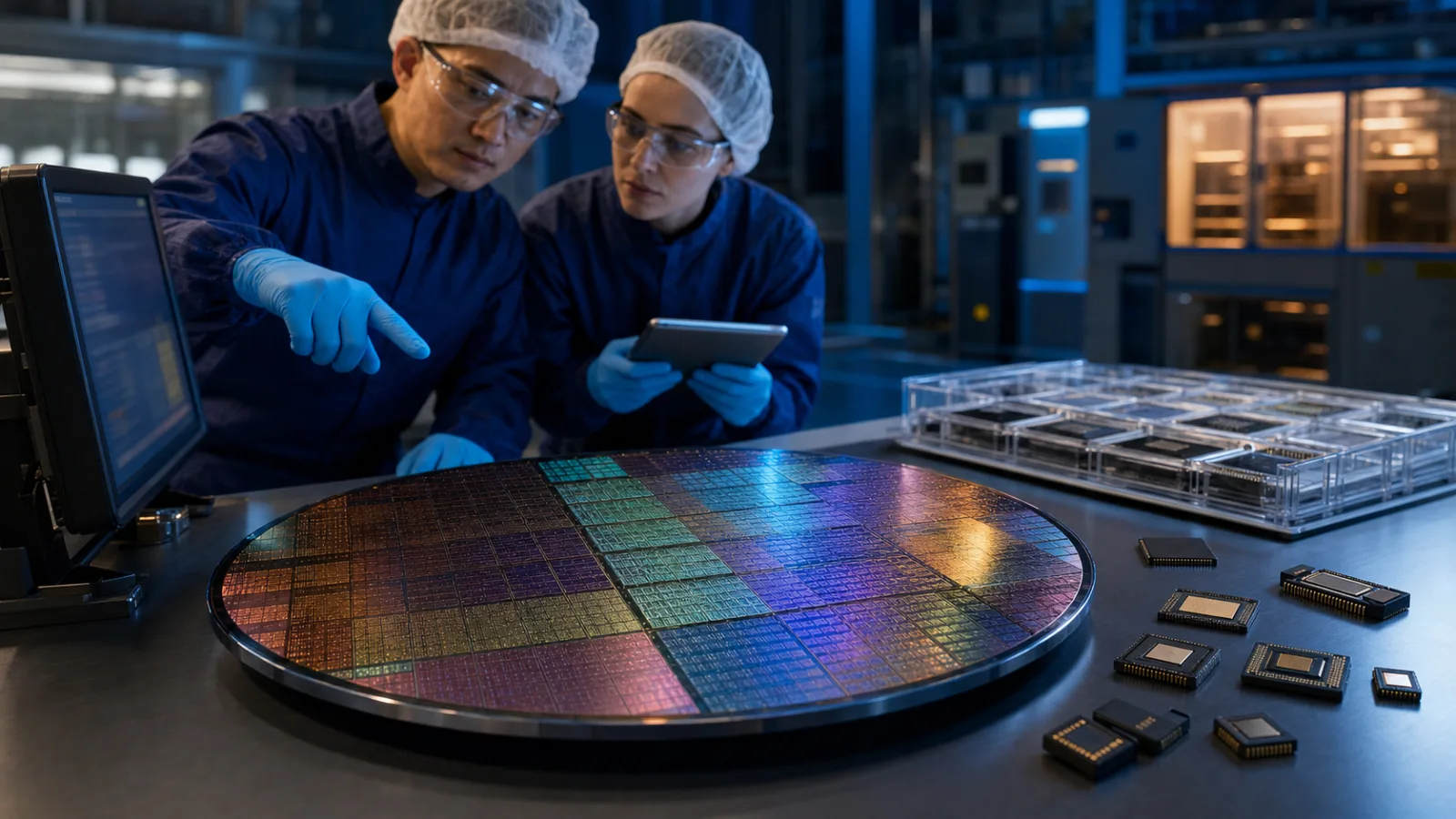
Short answer: MPW means multi-project wafer. Several chip designs share a fabrication run and its mask resources, helping teams obtain prototype silicon before committing to a dedicated route. An MPW project still needs a suitable process, approved design data, a confirmed submission window, and a plan for packaging and testing the resulting samples.
What do you need to decide next?
MPW is only the manufacturing format. Your next decision depends on your role, application and the evidence the first silicon must produce.
Screen process family, voltage or device options, die-area range, PDK status and the measurements the prototype must enable.
Align design freeze, verification evidence, schedule window, samples, packaging, test and decision milestones.
Prepare entity, country and end-use context, budget stage, quantity, commercial timing and the quotation boundary.
Use non-confidential assumptions first. Final process availability, quotation and schedule remain subject to requirement and supplier review.
This beginner tutorial shows how to turn a chip idea into a practical MPW project worksheet. You do not need a finished GDS file to do the planning exercise.
In this guide: a worked project brief, what an MPW quotation includes, and a readiness exercise.
How an MPW shuttle works
A shuttle brings several designs into a shared manufacturing arrangement. The provider defines the process, available design area, layout and submission rules, schedule and prototype deliverables. Each participant designs against that route’s requirements. Sharing manufacturing resources can reduce the entry cost, but it does not remove design, verification, packaging or test work.
EUROPRACTICE’s MPW overview describes shared prototyping, access to design kits and the path from design submission to fabricated prototypes. Its service scope is an example of one provider’s offering, not a promise about an MST quotation or another shuttle.
Step 1: define what you want to learn from silicon
Write one measurable goal: for example, evaluating a sensor interface across the design’s specified operating conditions. Then identify which outputs you need: bare die for a probe station, packaged samples for a board, or both. “We need chips” leaves the most important delivery question unanswered.
Keep prototype validation separate from a production qualification claim. Working samples can inform the next revision; they do not automatically establish manufacturing yield, reliability or readiness for volume supply.
Step 2: describe the process requirements
List the device capabilities your circuit needs before selecting a node: voltage domains, analog or RF devices, memory options, IO libraries, metal requirements and any qualified IP dependencies. Two processes with the same nominal node can offer different options. Record each requirement as confirmed, provisional or unknown.
Continue with the PDK preparation tutorial and the node-selection planning tool. A planning result helps frame questions; the route owner must confirm suitability.
Step 3: make a one-page MPW project brief
Use this invented learning example as a format, not a supported technology or price offer:
- Purpose: first evaluation of a small sensor-interface ASIC.
- Area: provisional 2 mm × 3 mm die; confirm whether the quoted area includes the required boundaries and other overhead.
- Design stage: schematic simulation in progress; layout and signoff are not complete.
- Desired output: 20 packaged evaluation units; actual allocation, assembly scope and test conditions remain to be confirmed.
- Package: a candidate family only; pin count, die fit and bonding feasibility still need review.
- Timing: target sample-use date plus the internal design-ready date; neither is a booked shuttle slot.
The result is useful because it exposes missing decisions. Do not replace an unknown with an attractive assumption just to complete the worksheet.
Turn the brief into next actions: the provisional die area is 6 mm², but the provider still needs to confirm its area-accounting rules. “20 packaged units” requires an assembly and test scope; it cannot be inferred from a bare-die allocation. A candidate package needs a pad-map and assembly review before it becomes a delivery commitment.
Step 4: compare MPW cost by delivered scope
Ask what the proposal includes: design access, shuttle participation, layout acceptance, prototype quantity, probe, dicing, assembly, final test, shipping and any one-time tooling. Compare offers only after aligning their deliverables. A shared-mask price is not necessarily the total cost of tested packaged samples.
| Line item | Write down before comparing quotes |
|---|---|
| Design access and fabrication | Process/options, accepted area, submission scope, access charges and prototype allocation. |
| Bare die or packaged parts | Delivered form, quantity, dicing, package, assembly setup and handling. |
| Electrical testing | Whether probe or final test is included, who supplies the test plan and which results are delivered. |
| Other costs and timing | Tooling, logistics and applicable charges; design deadline and estimated sample delivery stated separately. |
For example, quote A for bare die and quote B for packaged parts with an agreed test report describe different outputs. First list the work needed to reach the same endpoint, then compare totals. A blank cost line means “not confirmed,” not zero. This worksheet deliberately supplies no generic price: use the selected program’s current quotation for the actual process and scope.
Track design readiness, registration, final data acceptance, fabrication, post-wafer work and shipment as separate milestones. Read how to choose a shuttle for route selection and MPW versus pilot-wafer and full-mask routes for the next-stage comparison.
Try it: is this project ready to book?
A team has a 6 mm² area estimate and needs 20 packaged samples. Its PDK release is unconfirmed, it has no completed layout, and its target board-test date has not been checked against a shuttle schedule. Write one next action for design access, one for manufacturing timing and one for packaging.
Check your answer
The brief is enough to start a scope discussion. Confirm the process/options and authorized PDK access; establish the design-ready date before checking a suitable submission window; define package and test requirements with the assembly provider. The supplied facts do not establish a booked slot or a sample delivery date.
Your MPW learning path
- Prepare the PDK and process-requirement worksheet.
- Build a GDS, DRC and LVS handoff package.
- Plan packaging, probe and test before tapeout.
- Follow the complete tapeout-to-first-silicon checklist.
Frequently asked questions
Is MPW only for universities?
No. Programs can serve research teams, startups and commercial designers, subject to the particular provider’s eligibility, technology-access and commercial terms.
Do I need GDS to start planning?
No. Start with the non-confidential brief above. A design submission later needs the controlled technical package required by the selected route.
Does a shuttle booking guarantee working packaged chips?
No. Booking, design acceptance, fabrication, packaging and electrical results are different outcomes. Confirm exactly what is supplied and how each stage is accepted.
When the brief is ready, use the MPW RFQ Pack Builder or review MST’s MPW service scope. Public intake is for non-confidential requirements; layout, netlists, PDK files and design IP belong in the agreed controlled exchange.
Technical review: 17 September 2026. The worksheet and numeric example are educational; price, process access, capacity and deliverables require project-specific confirmation.
Related Articles
Ready to plan your MPW and first-silicon path?
Start with a non-confidential brief covering node/process fit, schedule, first-silicon validation, packaging/test, sample handling or re-spin needs. MST routes the request for review; feasibility, availability, timing and quotation are confirmed case by case.