
MPW Readiness Checker: What to Review Before Partner RFQ
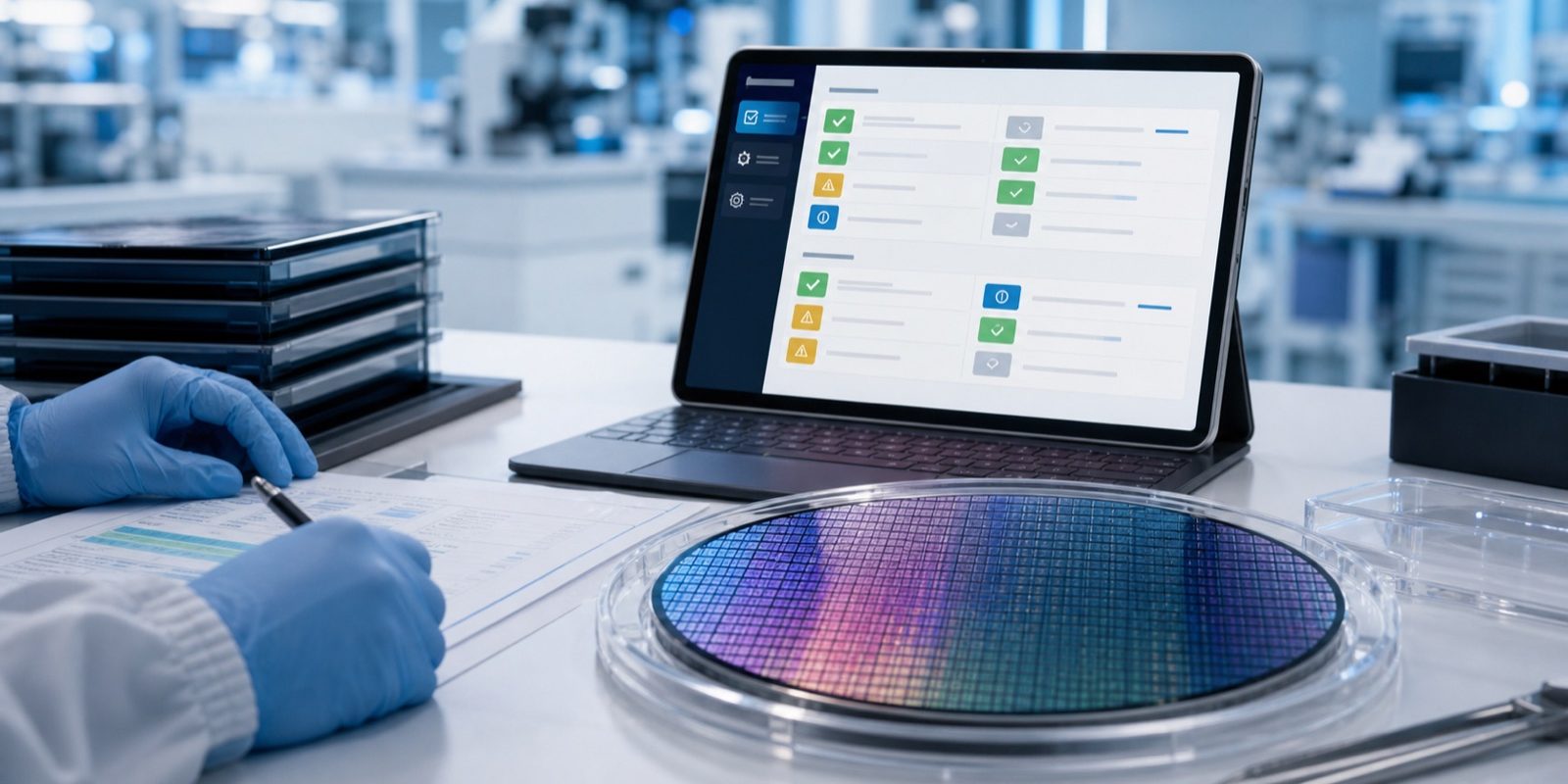
Use the MPW Readiness Checker to turn an early prototype request into a structured gap list before partner review, without uploading GDS or design IP.
- →Answer-first summary
- →When this tool is the right first step
- →What the readiness check should cover
- →Sample readiness output
- →Public-intake boundary
Answer-first summary
An MPW readiness checker is useful before a mature-node prototype request is sent for partner RFQ because it turns a vague chip-manufacturing question into a structured gap list. The first review should cover process fit, PDK/NDA path, design-readiness status, package and test assumptions, timeline, customer context and end use. It should not require GDS, RTL, netlists, source code, PDK files or proprietary design IP at public intake.
MST’s browser-based MPW Tapeout Readiness Checker is designed for this first-screen stage. It helps a team decide whether a request is ready for partner review, needs more engineering definition, or should stay in planning mode before any sensitive file exchange.
When this tool is the right first step
Use the checker when the project already has an application goal, an approximate node range and a rough idea of sample needs, but the route is not yet ready for a formal MPW submission. Typical cases include 180nm analog/mixed-signal prototypes, high-voltage or BCD feasibility questions, RF front-end test chips, sensor-interface ASICs and industrial-control chips where the package and test path may be as important as the wafer run.
The checker is also useful when a customer is asking for “MPW price” too early. A realistic RFQ needs more than a node name. Die area, process options, IP blocks, pad count, package target, wafer probe, final test, compliance context and timeline all affect whether the case is reviewable.
What the readiness check should cover
1. Non-confidential project identity
The first screen should identify the customer type, country, application area and end-use background. This is not a design disclosure step. It is a routing and compliance step so MST can decide whether the case can move toward qualified partner review.
2. Process-family fit
The request should distinguish plain CMOS, analog/mixed-signal, BCD, high voltage, RF, eNVM, sensor-interface or MEMS-related needs. “180nm” alone is not enough. Two 180nm projects can require very different PDKs, device options and review paths.
3. PDK/NDA path status
The checker should record whether the team already has a process target, whether an NDA path is needed, whether PDK access has been discussed, and whether the customer understands that detailed design work depends on route-specific approval.
4. Design-readiness status
Useful fields include schematic status, layout status, DRC/LVS status, pad-ring status, ESD assumptions, top-cell definition, package co-design status and whether the team is still estimating die area. The point is to classify readiness, not to collect layout files.
5. Package, wafer probe and final test
Many early MPW requests ask only for wafer access. A useful readiness check also asks about package family, sample quantity, wafer-probe needs, final-test expectations, operating conditions, characterization goals and whether evaluation boards or fixtures are needed.
Sample readiness output
Example input
- Application: industrial sensor-interface ASIC
- Target range: 180nm mature-node mixed-signal
- Estimated die area: 4 mm x 4 mm, not final
- Samples: 50 packaged parts for first bring-up
- Package: QFN preference, pad count not final
- Design state: schematic in progress, no final layout
- End use: commercial industrial equipment
Example output
| Area | Status | Next action |
|---|---|---|
| Process fit | Reviewable at category level | Clarify mixed-signal devices, voltage domains and any NVM need. |
| PDK/NDA path | Not ready for design exchange | Keep public intake non-confidential and identify the required NDA/PDK gate. |
| Package/test | Incomplete | Define package body target, pad count estimate, probe expectations and final-test goals. |
| Partner RFQ readiness | Needs structured brief | Prepare a no-GDS RFQ pack before partner routing. |
Public-intake boundary
At the checker stage, a team should keep the input at planning level. Do not upload GDS, OASIS, netlists, RTL, source code, PDK files, proprietary schematics or confidential customer drawings. If a later route needs controlled design data, that should happen only after the correct NDA, review path and transfer instructions are clear.
How MST uses this output
MST uses the readiness output as a first-screen artifact. It helps MST ask better questions, identify missing fields, prepare a non-confidential RFQ brief and decide whether the case is suitable for a partner-confirmed next step. For a live request, use the MPW Readiness Checker, then open an MPW RFQ with the resulting non-confidential summary.
Related Articles


Ready to plan your MPW and first-silicon path?
Start with a non-confidential brief covering node/process fit, schedule, first-silicon validation, packaging/test, sample handling or re-spin needs. MST routes the request for review; feasibility, availability, timing and quotation are confirmed case by case.