
Sample No-GDS MPW RFQ Brief: What to Send First
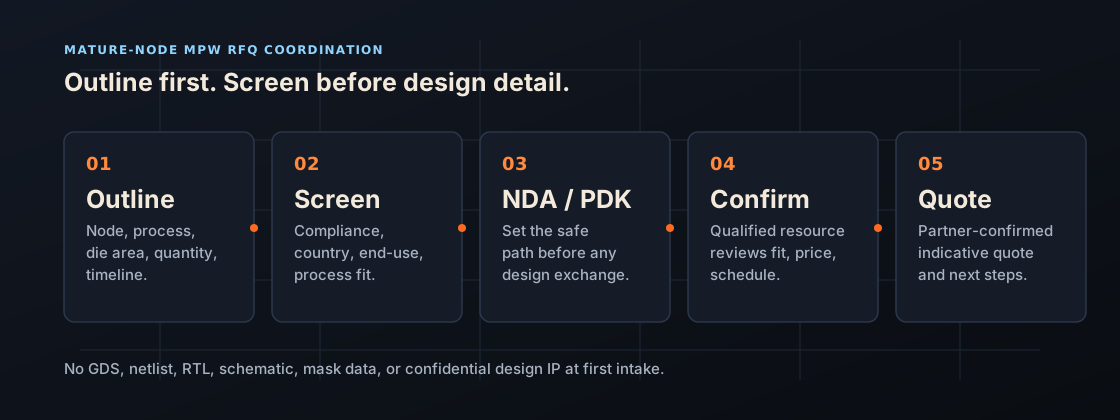
This sample no-GDS MPW RFQ brief shows what an overseas team can safely send at the first intake stage before controlled design-file exchange.
- →Answer-first summary
- →Sample no-GDS RFQ brief
- →What MST can do with this brief
- →What is intentionally excluded
- →Follow-up questions MST would ask
Answer-first summary
A no-GDS MPW RFQ brief is the safest first document for a mature-node prototype request. It gives MST enough information to screen process fit, NDA/PDK path, package/test scope and partner-review readiness without receiving layout data or proprietary design IP. The first brief should be clear, bounded and non-confidential.
The sample below is fictional. It is written to show what an overseas team can send first when it is not yet ready, or not yet permitted, to exchange controlled design files.
Sample no-GDS RFQ brief
Project overview
We are evaluating an MPW route for a mature-node analog/mixed-signal prototype used in commercial industrial equipment. The project is intended for first-silicon learning, package and bench validation, and preparation for a later engineering run if the prototype is successful.
Requested process range
- Preferred node range: 180nm to 130nm
- Process family: analog/mixed-signal CMOS
- Possible requirements: moderate-voltage devices and thick-metal option, to be confirmed
- Open question: whether BCD or high-voltage process options are needed
Prototype assumptions
- Estimated die area: 4 mm x 4 mm, not final
- Sample target: 50 packaged units for first bring-up
- Package preference: QFN, final package and pin count not fixed
- Wafer probe: unknown; customer needs guidance
- Final test: bench characterization first, production test not yet defined
Design readiness
- Schematic: in progress
- Layout: not complete
- DRC/LVS: not available yet
- GDS/OASIS: not ready for exchange
- PDK status: route-specific PDK path not established
Customer and end-use context
- Customer type: commercial engineering company
- Country or region: to be provided in intake
- End use: commercial industrial monitoring equipment
- Restricted use: customer to declare if any restricted application is involved
- NDA contact: customer legal or engineering manager to be identified
What MST can do with this brief
With this level of information, MST can screen whether the request is coherent enough for MPW RFQ preparation, identify process-family questions, list missing package/test fields, clarify whether an NDA/PDK path is needed and prepare a partner-review packet if the case is suitable.
What is intentionally excluded
The brief excludes GDS, OASIS, RTL, netlists, source code, schematics, PDK files, foundry documents, private IP, customer confidential drawings and mask data. Those items should remain outside public intake until the correct controlled route is established.
Follow-up questions MST would ask
- What exact voltage domains and analog blocks drive the process-family choice?
- Is the sample target packaged-unit count or wafer-die count?
- Does the customer need wafer probe, final test, characterization support or evaluation hardware?
- Which legal entity should enter the NDA path if the request moves forward?
- What schedule is desired for first partner feedback, not final tapeout?
Use the brief with MST tools
Create a similar no-GDS first brief with the MPW RFQ Pack Builder. If you are unsure whether the request is ready, run the MPW Readiness Checker first, then submit the non-confidential summary through the MPW RFQ intake.
Related Articles


Ready to scope your run?
Send node, process family, die area, volume and timeline - no design IP. We screen it, route to a qualified partner, and return an indicative quote.