Answer
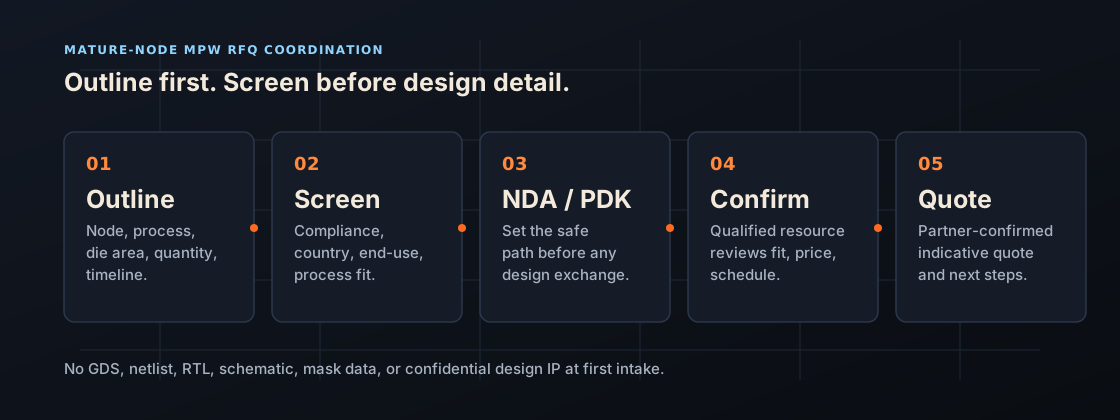
An early MPW inquiry should make the project reviewable before sensitive files move. MST starts from a high-level brief: target node, process family, die-size estimate, sample quantity, package and test assumptions, schedule window, customer country or region, end-use context and NDA/PDK status. The first step is scope clarification, not design-file collection.
Prepare
What to include in the first brief
Start with non-confidential planning information: node range, process family, rough die area, sample target, package direction, probe or characterization needs, timeline, customer type and end-use context.
Hold back
What not to send publicly
Do not upload GDS, OASIS, netlists, RTL, source code, PDK files, proprietary schematics, customer rule decks or confidential IP through a public form or first-contact message.
Review
What MST checks before routing
MST reviews process fit, missing fields, compliance context, NDA/PDK path, package/test scope and whether the request is clear enough for qualified partner or fab-confirmed review.
Next step
What the brief can lead to
A clean first brief can lead to follow-up questions, readiness gaps, a partner-review packet, an NDA/PDK route discussion, or a formal RFQ path when the case is qualified.
Why no-GDS intake matters
MPW discussions often begin before a team is ready to exchange a full tapeout package. Asking for GDS too early creates avoidable IP, NDA and compliance risk. A better first step is to separate public planning questions from NDA-gated design data.
This is especially important for overseas fabless teams, university groups, early startups and industrial chip developers that need to understand process fit, package/test scope and commercial feasibility before committing controlled files.
The practical first-screening brief
A useful first brief does not need layout geometry. It needs enough context for engineering and commercial screening:
- target node or node range, such as 0.35um, 180nm, 130nm, 90nm, 65/55nm or 40nm;
- process family, such as CMOS, analog, mixed-signal, RF, BCD, high-voltage, sensor or embedded NVM;
- rough die-area estimate and expected sample quantity;
- package preference, wafer probe need, final test or characterization goal;
- desired tapeout or shuttle window;
- customer country or region, customer type and intended application;
- current status of NDA, PDK access, DRC/LVS and design readiness.
Where package, probe and test enter the conversation
A quote path is not only about wafer access. Package, wafer probe, final test, characterization, sample logistics and first-silicon learning can affect cost and schedule. MST brings these assumptions into the first review so the request does not stay at a wafer-only level.
How MST handles the next step
MST turns the first brief into a reviewable intake package. The review flags missing inputs, process-fit uncertainty, NDA/PDK questions, package/test gaps, compliance holds and partner-response items. When the case is qualified, MST coordinates the next practical step through the appropriate partner or fab-confirmed route.
Frequently asked questions
Can I start an MPW RFQ without uploading GDS?
Yes. A first MPW RFQ can start with a non-confidential brief covering node, process family, die-size estimate, sample quantity, package/test assumptions, timeline, customer country or region, end-use context and NDA/PDK status. GDS is not required at public intake.
What should I prepare before asking for an MPW quote?
Prepare the target node or node range, process family, rough die area, expected sample quantity, package preference, wafer-probe or final-test assumptions, desired tapeout window, application context, country or region and current design status.
When should GDS, netlist, RTL or PDK files move?
Sensitive design files should move only after the correct NDA, partner route and technical review path are clear. Public intake should avoid GDS, OASIS, netlists, RTL, source code, PDK files, proprietary schematics and customer IP.
Does a no-GDS brief guarantee a foundry slot or price?
No. The brief makes the request reviewable. Availability, pricing, shuttle window, PDK access, package, wafer probe, final test and schedule are confirmed case by case through a qualified partner or fab-confirmed route.
How does MST help after the first brief?
MST screens the request for process fit, missing information, compliance context, NDA/PDK path, package/test scope and partner-review readiness, then coordinates the next step when the case is qualified.