- →Why Is SPC No Longer Sufficient for Advanced Semiconductor Manufacturing?
- →What Exactly Can AI Detect That SPC Cannot?
- →Does AI Replace SPC or Complement It?
- →What Does the Transition Look Like in Practice?
- →How Do You Calculate the ROI of Adding AI to SPC?
Key Takeaway
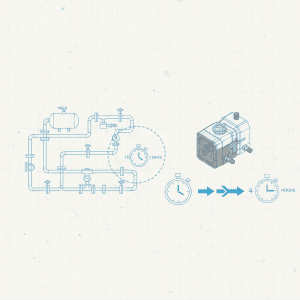
Statistical Process Control (SPC) remains essential for compliance and basic monitoring, but AI-powered process control detects subtle multivariate drift patterns that SPC misses entirely — reducing false alarms by up to 70% and catching real excursions 2-4 hours earlier. The optimal strategy is not replacing SPC but layering AI on top of it, using platforms like NeuroBox E3200 that integrate with existing SPC infrastructure rather than displacing it.
Why Is SPC No Longer Sufficient for Advanced Semiconductor Manufacturing?
Statistical Process Control has served semiconductor manufacturing well for four decades. Walter Shewhart’s control charts and Western Electric rules remain foundational to quality management, and every fab in the world runs some form of SPC. For regulatory compliance alone, SPC is non-negotiable.
But SPC was designed for an era of simpler processes. A modern etch chamber generates 500-2000 sensor parameters per wafer run. SPC monitors these parameters individually using univariate control limits. When a critical dimension shifts because of a complex interaction between three gas flows, a temperature gradient, and chamber wall conditioning — a multivariate pattern — SPC often cannot detect the drift until it manifests as an out-of-spec measurement at metrology, hours or shifts later.
SEMI reports that undetected process drift accounts for 15-25% of yield loss in advanced fabs. This is the gap that AI-powered process control addresses.
What Exactly Can AI Detect That SPC Cannot?
AI-powered process control, particularly methods based on multivariate machine learning models, excels in three areas where SPC is structurally limited:
Multivariate Correlations: AI models simultaneously analyze hundreds of parameters and detect drift patterns that span multiple variables. A subtle 0.5% shift in RF power combined with a 2-degree temperature change and a 1% gas flow variation might each be within SPC limits individually but collectively indicate an impending chamber issue. AI catches this; SPC does not.
Temporal Patterns: Recurrent neural networks and LSTM models can identify time-series patterns such as gradual chamber degradation over 50-100 wafer runs. SPC’s snapshot-based approach treats each wafer independently and misses these slow-moving trends until they cross hard thresholds.
Non-Linear Relationships: Many semiconductor processes exhibit non-linear behavior — small input changes can cause disproportionate output shifts near process boundaries. AI models capture these non-linearities naturally, while SPC assumes linear, Gaussian-distributed behavior.
Real-world data supports the difference. Fabs deploying AI-powered FDC (Fault Detection and Classification) alongside traditional SPC consistently report 60-70% reductions in false alarms and 2-4 hour improvements in excursion detection time.
Does AI Replace SPC or Complement It?
This is perhaps the most important question for fab managers considering the transition, and the answer is clear: AI complements SPC rather than replacing it.
SPC remains necessary for several reasons. Regulatory frameworks (ISO 9001, IATF 16949 for automotive semiconductor, SEMI standards) require SPC documentation. SPC provides simple, interpretable control charts that operators understand immediately. And SPC serves as a baseline sanity check — if a parameter is wildly out of control, you want the SPC alarm regardless of what the AI model says.
The most effective architecture layers AI on top of SPC. SPC continues to monitor individual parameters against control limits, catching gross excursions and maintaining compliance. AI monitors the multivariate process state, catching subtle drift patterns, predicting equipment degradation, and providing early warnings before SPC limits are breached.
Think of SPC as the smoke detector and AI as the thermal imaging system. You want both.
What Does the Transition Look Like in Practice?
Transitioning from SPC-only to AI-augmented process control does not require ripping out existing systems. The practical deployment path typically follows four phases:
Phase 1 — Data Integration (1-2 weeks): Connect AI platform to existing equipment data streams via SECS/GEM or OPC UA. The NeuroBox E3200, for example, includes pre-built connectors for 50+ tool types and can begin ingesting data within days of installation.
Phase 2 — Shadow Mode (2-4 weeks): Run AI models in parallel with existing SPC systems without taking control actions. This phase builds confidence by showing engineers what the AI detects that SPC misses, and vice versa.
Phase 3 — Advisory Mode (4-8 weeks): AI generates recommendations (parameter adjustments, maintenance alerts) that engineers review and approve before execution. False positive rates are measured and model thresholds are tuned.
Phase 4 — Closed-Loop Control (ongoing): For validated use cases, AI takes automated control actions (R2R parameter adjustments, lot holds) with SPC serving as a safety net. Most fabs maintain human approval for high-impact decisions like tool shutdowns.
How Do You Calculate the ROI of Adding AI to SPC?
The ROI calculation centers on three value drivers:
Reduced Scrap and Rework: Earlier excursion detection saves 2-4 hours of production on potentially affected lots. For a 300mm fab running high-value logic wafers, each hour of undetected drift can affect 25-50 wafers worth $5K-$50K each. Catching drift 3 hours earlier could save $375K-$7.5M per incident, depending on product value and fab throughput.
Fewer False Alarms: SPC false alarms are expensive not because of the alarm itself but because of the engineering response. Each false alarm typically consumes 30-60 minutes of a process engineer’s time. A fab generating 20 false alarms per day across its tool fleet is losing 10-20 engineer-hours daily. A 70% reduction in false alarms reclaims 7-14 engineer-hours per day — equivalent to 1-2 full-time engineers redirected to value-added work.
Predictive Maintenance: AI-detected degradation patterns enable scheduled maintenance before unplanned downtime occurs. Industry data shows unplanned downtime costs 3-5x more than planned maintenance due to emergency parts procurement, lost production, and qualification wafer consumption.
Conservative estimates suggest payback periods of 3-6 months for AI-augmented process control in fabs running 50+ tools.
What Should You Look for in an AI Process Control Platform?
When evaluating AI platforms to layer on top of your SPC infrastructure, prioritize these capabilities:
Equipment Agnosticism: Your AI platform should connect to all your tools regardless of manufacturer. Platforms like NeuroBox E3200 support SECS/GEM and OPC UA natively, ensuring coverage across heterogeneous fab environments.
Explainable Outputs: Process engineers need to understand why an AI model flags an anomaly. Black-box alerts without attribution are ignored. Look for platforms that provide feature importance rankings and parameter contribution analysis.
SPC Integration: The AI platform should work alongside your existing SPC system (Camstar, Promis, InfinityQS, etc.), not require you to replace it. Data should flow bidirectionally so that SPC context enriches AI models and AI insights appear in SPC dashboards.
On-Premise Deployment: Semiconductor process data is highly sensitive IP. Ensure the AI platform can run entirely within your facility network with no mandatory cloud connectivity.
The transition from SPC to AI-augmented process control is not a question of if but when. The fabs that move first capture yield and efficiency advantages that compound over time — making early adoption a genuine competitive differentiator.
Deploy real-time AI process control with sub-50ms latency on your production line.