- →Why Does Every Fab Eventually Face the Build-or-Buy Question?
- →What Does It Actually Cost to Build In-House?
- →What Are the Real Advantages of Building Internally?
- →What Do Third-Party Platforms Offer That Self-Built Cannot?
- →How Should You Evaluate the Total Cost of Ownership?
Key Takeaway
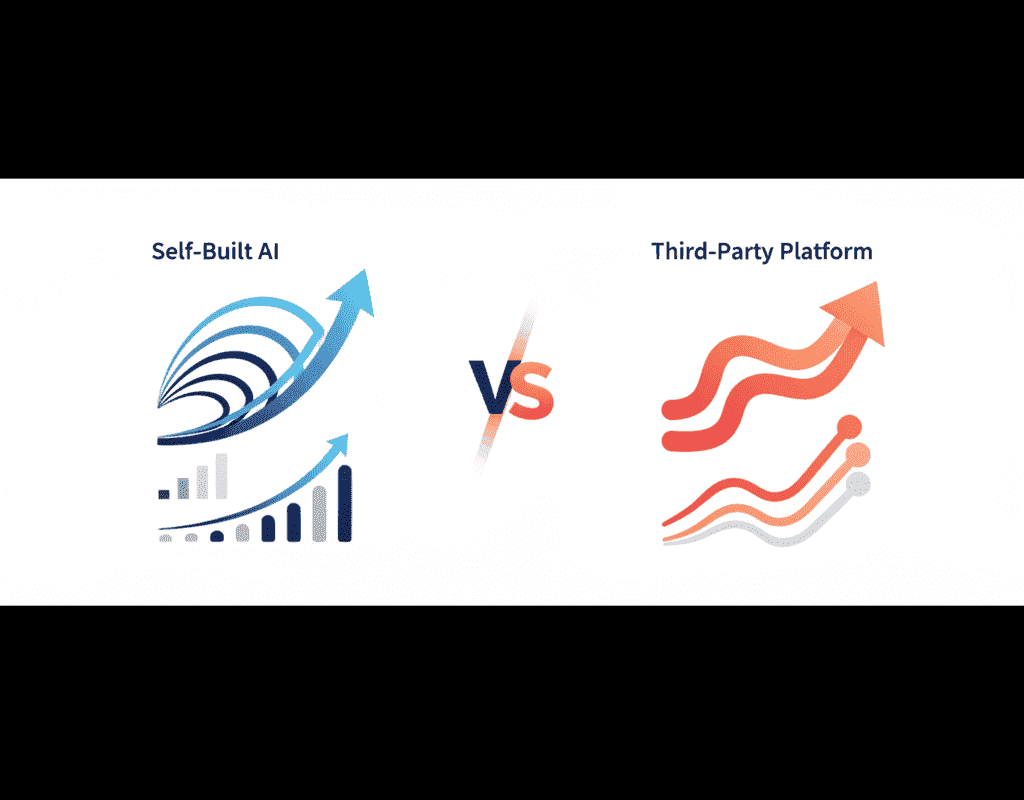
Building an in-house AI system for semiconductor process control typically costs 3-5x more than licensing a proven third-party platform and takes 18-36 months before delivering production value. Third-party platforms like NeuroBox offer faster time-to-value and lower risk, while self-built systems provide maximum customization for companies with deep data science teams. The right choice depends on your engineering resources, timeline pressure, and strategic AI ambitions.
Why Does Every Fab Eventually Face the Build-or-Buy Question?
As AI adoption in semiconductor manufacturing accelerates, nearly every fab director and CTO confronts the same strategic question: should we build our own AI platform internally, or license a commercial solution? Gartner estimates that 70% of industrial companies that attempt to build custom AI platforms fail to move beyond pilot stage within two years. Yet the desire for full control over proprietary process knowledge is a powerful motivator.
This question is not theoretical. A 200mm specialty fab and a leading-edge 3nm logic fab face fundamentally different calculations. Understanding the true costs, risks, and benefits of each path is essential for making a decision that holds up over a 5-10 year horizon.
What Does It Actually Cost to Build In-House?
The visible costs of building an internal AI platform are substantial but often underestimated. A dedicated team typically requires 4-8 engineers: data scientists, ML engineers, software developers, and domain experts who understand semiconductor processes. In competitive hiring markets like Silicon Valley, Austin, or Hsinchu, fully loaded costs for such a team run $800K-$2M annually.
Beyond personnel, infrastructure costs include GPU compute resources ($50K-$200K for on-premise training hardware), data pipeline engineering, SECS/GEM integration development, model monitoring systems, and ongoing maintenance. Industry benchmarks suggest total three-year costs of $3M-$8M for a production-ready system covering virtual metrology and basic R2R control.
The hidden cost is opportunity cost. Every month spent building infrastructure is a month not spent improving yields. One large memory fab reported that its 18-month internal AI development effort delayed yield improvement gains worth an estimated $12M in additional revenue.
What Are the Real Advantages of Building Internally?
Self-built systems offer genuine advantages that should not be dismissed. Full control over the model architecture means the system can be tailored precisely to your process recipes and equipment configurations. IP ownership is complete — there are no licensing dependencies or vendor roadmap risks.
Companies with world-class data science teams (think Samsung, TSMC, or Intel) can build systems that incorporate deeply proprietary process knowledge that no third-party vendor could replicate. These companies also have the scale to amortize development costs across dozens of fabs and thousands of tools.
For companies at this scale, building internally is often the correct strategic choice. The question becomes more nuanced for mid-size fabs, equipment OEMs, and specialty manufacturers.
What Do Third-Party Platforms Offer That Self-Built Cannot?
Commercial platforms like NeuroBox, Applied Materials AIx, and others bring years of domain-specific development already completed. A platform like NeuroBox, for example, ships with pre-built SECS/GEM connectors for 50+ equipment types, validated VM and R2R algorithms, and transfer learning capabilities that reduce model training from hundreds of wafers to as few as 15.
Time-to-value is the most significant differentiator. Where a self-built system might take 18-36 months to reach production, commercial platforms can deliver initial production models in 2-8 weeks. For a fab losing $50K-$200K per day in yield-related losses, the speed difference translates directly to financial impact.
Third-party platforms also carry cross-customer learning advantages. Vendors who deploy across multiple fabs accumulate pattern libraries and model architectures that benefit every customer. This network effect is impossible to replicate in a single-company build effort.
How Should You Evaluate the Total Cost of Ownership?
A rigorous TCO comparison should include these categories over a 3-5 year horizon:
Self-Built Costs: Team hiring and retention ($2.4M-$6M over 3 years), infrastructure ($150K-$600K), integration development ($200K-$500K), ongoing maintenance (20-30% of build cost annually), and opportunity cost of delayed deployment.
Third-Party Costs: Platform licensing ($150K-$500K annually depending on scope), integration services ($50K-$150K one-time), internal champion/admin (0.5-1 FTE), and customization fees for non-standard requirements.
When all costs are included, third-party platforms typically deliver 3-5x lower TCO for companies running fewer than 500 tools. The economics shift toward self-built for very large organizations with 1000+ tools and existing AI infrastructure.
Is There a Hybrid Approach That Works?
Increasingly, the smartest organizations are adopting a hybrid strategy. They license a commercial platform for immediate production deployment while building internal capabilities for long-term differentiation. This approach captures the quick ROI of a proven platform while developing proprietary models that address unique competitive advantages.
NeuroBox supports this hybrid model through its open API architecture, allowing fabs to run custom models alongside NeuroBox’s built-in algorithms. Several equipment OEMs have adopted this approach — using NeuroBox as the production backbone while their internal teams develop specialized models for next-generation processes.
The build-or-buy decision is not binary. The most successful semiconductor companies treat it as a spectrum, choosing the right balance of external platform and internal capability based on their specific competitive context, resource availability, and strategic timeline.
Discover how MST deploys AI across semiconductor design, manufacturing, and beyond.