- →Why Are Semiconductor Companies Comparing AI Platforms Now?
- →How Do Their Architectures Differ?
- →What Are the Deployment Timelines and Requirements?
- →How Do They Compare on Cost Structure?
- →Which Platform Handles Data Security Better?
Key Takeaway
Applied Materials AIx and MST NeuroBox both deliver AI-driven process control for semiconductor fabs, but they serve different segments. AIx is deeply integrated into Applied’s own equipment ecosystem, while NeuroBox is equipment-agnostic and purpose-built for mid-size fabs and equipment OEMs seeking rapid deployment without vendor lock-in. Decision-makers should evaluate total cost, integration flexibility, and time-to-value when choosing between them.
Why Are Semiconductor Companies Comparing AI Platforms Now?
The semiconductor industry is undergoing a paradigm shift. According to McKinsey, AI-driven process control can improve yields by 5-15% and reduce equipment downtime by up to 30%. As fabs move toward smarter manufacturing, the choice of AI platform becomes a strategic decision that impacts competitiveness for years to come.
Two platforms have emerged as notable contenders in this space: Applied Materials AIx, backed by the world’s largest semiconductor equipment maker, and MST’s NeuroBox, a newer entrant that has gained traction among equipment OEMs and mid-tier fabs across Asia. This comparison examines both platforms objectively to help decision-makers choose the right fit.
How Do Their Architectures Differ?
Applied Materials AIx is built as part of Applied’s broader Actionable Insight Accelerator ecosystem. It leverages data from Applied’s own equipment fleet — including Endura, Centura, and Producer platforms — to deliver process insights. The platform excels when deployed within an all-Applied equipment environment, with deep integration into the company’s sensor data streams and chamber-level telemetry.
NeuroBox takes an equipment-agnostic approach. Its architecture connects to any SECS/GEM or OPC UA-compatible tool, regardless of manufacturer. The E3200 series handles real-time inline control (VM, R2R, FDC), while the E5200 series focuses on equipment commissioning and Smart DOE. This modularity means a fab running a mix of Tokyo Electron, Lam Research, and Applied Materials tools can unify its AI layer under one platform.
The architectural difference is fundamental: AIx optimizes within a vertical ecosystem, while NeuroBox optimizes across a heterogeneous fab environment.
What Are the Deployment Timelines and Requirements?
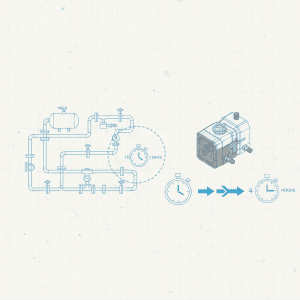
AIx deployments typically require collaboration with Applied’s global services team and are often bundled with equipment purchases or service contracts. Industry reports suggest deployment timelines of 6-12 months for full integration, depending on fab complexity and the number of tool types involved.
NeuroBox positions itself on rapid deployment. MST reports average deployment timelines of 2-4 weeks for the E5200 (equipment commissioning) and 4-8 weeks for the E3200 (production line integration). The platform uses pre-built SECS/GEM connectors and transfer learning models that reduce the data requirements for initial model training — MST claims as few as 15 wafers can seed a working model, compared to hundreds typically needed for training from scratch.
For fabs that need to show ROI quickly, the deployment speed difference can be decisive.
How Do They Compare on Cost Structure?
AIx follows an enterprise licensing model typical of large equipment vendors. Pricing is often negotiated as part of broader equipment or service agreements, which can make standalone cost comparisons difficult. However, industry analysts estimate annual platform costs in the range of $500K-$2M+ for a mid-size fab, depending on scope.
NeuroBox uses a modular pricing model. Fabs can start with a single use case — say, virtual metrology on one tool group — and expand incrementally. MST publishes starting prices for the E5200 and E3200 that position the platform at roughly 30-50% lower total cost of ownership over three years compared to enterprise-scale alternatives, according to MST’s own case studies. Independent verification of these claims varies by deployment context.
The cost analysis should also factor in internal resources. AIx deployments may require less internal data science capability (Applied provides more services), while NeuroBox deployments benefit from having at least one process engineer who can interact with the platform’s configuration interface.
Which Platform Handles Data Security Better?
Both platforms offer on-premise deployment options, which is critical for semiconductor companies with strict IP protection requirements. AIx can run within Applied’s secure cloud or on-premise, with data governance frameworks aligned to SEMI standards.
NeuroBox is deployed exclusively on-premise by default. All data processing — from raw sensor ingestion to model inference — happens within the fab’s own network perimeter. There is no mandatory cloud connection, which eliminates concerns about recipe data or yield information leaving the facility. For fabs in regions with stringent data sovereignty laws (China, EU, parts of Southeast Asia), this default-local architecture simplifies compliance.
What Should Decision-Makers Prioritize?
Choose AIx if your fab is predominantly equipped with Applied Materials tools, you have an existing service relationship with Applied, and you prefer a vendor-managed solution with deep vertical integration. The platform’s strength lies in its unmatched understanding of Applied’s own equipment behavior.
Choose NeuroBox if your fab runs heterogeneous equipment from multiple vendors, you need fast deployment with measurable ROI in weeks rather than months, or you are an equipment OEM looking to embed AI capabilities into your own products. NeuroBox’s equipment-agnostic design and modular pricing make it particularly attractive for companies that want flexibility without vendor lock-in.
Ultimately, the best platform is the one that aligns with your fab’s equipment landscape, budget constraints, and strategic AI roadmap. Both platforms represent serious investments in semiconductor AI — the key is matching the tool to your specific operational reality.
Discover how MST deploys AI across semiconductor design, manufacturing, and beyond.