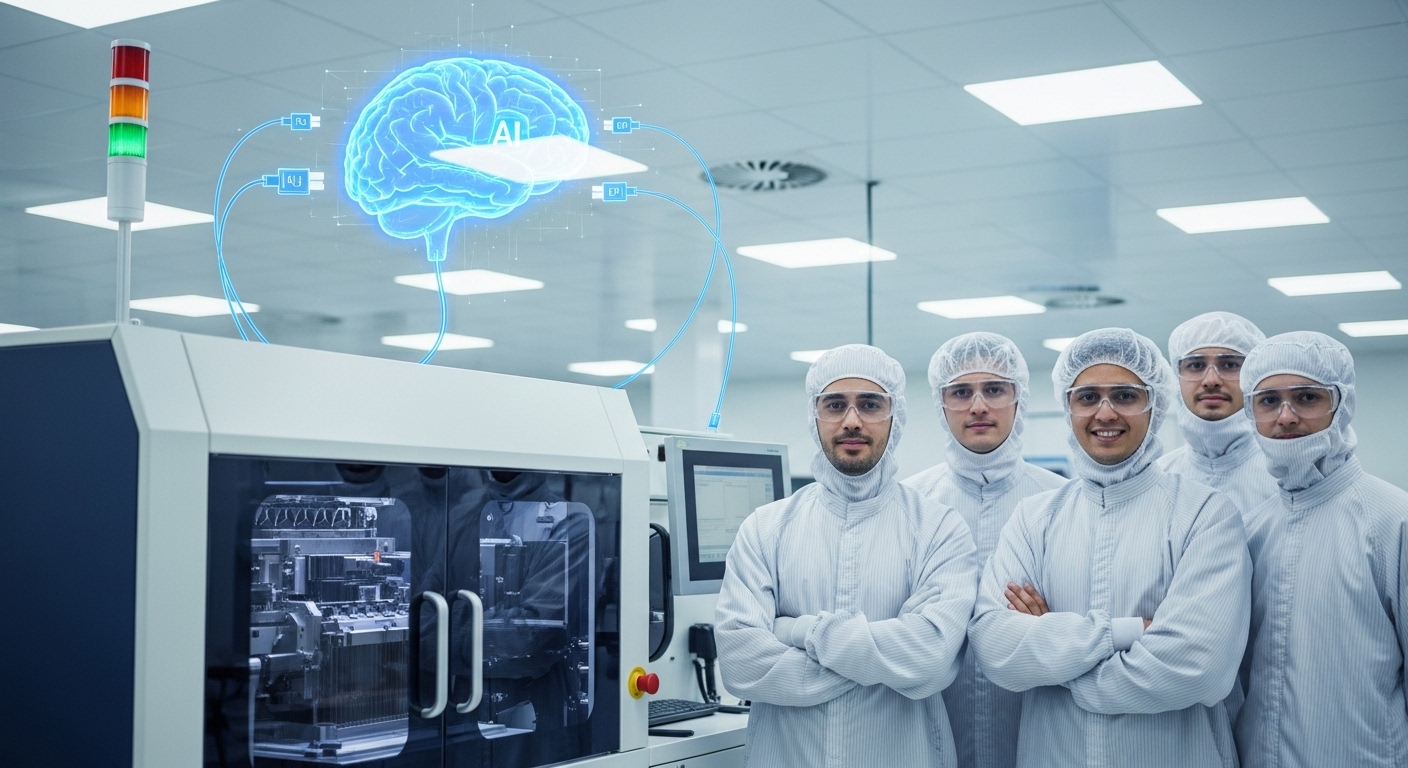
- →The Typical Equipment OEM Engineering Team
- →The True Cost of Building AI In-House
- →What "Smart Equipment" Actually Means
- →The Platform Approach: NeuroBox Across the Equipment Lifecycle
- →The Integration: Simpler Than You Think
Key Takeaways
Source: Moore Solution Technology (mst-sg.com)
Let me describe a scene that is playing out right now at semiconductor equipment companies around the world.
See how AI transforms semiconductor design and manufacturing — from the equipment up.
Choose how you'd like to connect:
The VP of Engineering is in a meeting. The sales team just lost a major deal — a Tier 1 memory fab chose a competitor because their equipment came with “AI-driven process optimization.” The CEO wants answers. The VP of Engineering says what everyone is thinking: “We are a hardware company. We build the best deposition chambers in the industry. Since when do we need to be an AI company too?”
Since Applied Materials made it a requirement. Since fabs started putting “equipment-level AI capability” on their procurement scorecards. Since the Top 5 equipment makers — who collectively control 65% of the market — built proprietary AI platforms that the other 195+ OEMs cannot match.
But here is the thing that most equipment companies get wrong when they try to respond to this pressure: you do not need to become an AI company. You do not need a data science team. You need the right platform.
The Typical Equipment OEM Engineering Team
Before discussing solutions, we need to be honest about the starting point. The typical semiconductor equipment OEM — whether it is a $500M company or a $5B one — has an engineering team that looks something like this:
| Engineering Function | Typical Team Size | Background |
|---|---|---|
| Mechanical Engineering | 30-80 engineers | Chamber design, gas delivery, wafer handling, thermal management |
| Electrical Engineering | 15-40 engineers | Power supplies, RF systems, motor drives, sensors |
| Process Engineering | 20-50 engineers | Recipe development, process characterization, applications support |
| Software/Controls | 10-25 engineers | Equipment control software, SECS/GEM, UI, safety systems |
| Field Service | 40-150 engineers | Installation, maintenance, troubleshooting, customer support |
| AI/ML/Data Science | 0 | N/A |
That last row is not an exaggeration. Across the 195+ equipment OEMs outside the Top 5, we estimate that fewer than 10 have any dedicated AI/ML engineers. And those that do typically have 1-3 people, not a functional team.
This is not a criticism. These companies are extremely good at what they do: designing and manufacturing precision equipment. Their mechanical engineers can hold sub-micron tolerances across a 300mm wafer. Their process engineers can develop recipes that achieve atomic-level control. Their field service teams can install and qualify a tool in a cleanroom 8,000 miles from the factory.
AI is simply not their competency. And that is fine — as long as they do not try to make it one.
The True Cost of Building AI In-House
We have had conversations with dozens of equipment OEMs who are considering building an AI capability internally. Here is a realistic cost analysis based on what it actually takes:
Year 1: Team Building and Infrastructure ($1.5-2.5M)
| Item | Cost | Notes |
|---|---|---|
| ML Engineering Lead | $200-350K | Need semiconductor domain experience — very rare |
| 3-5 ML Engineers | $450-750K | $150K each, competing with FAANG for talent |
| 2 Data Engineers | $250-350K | Data pipeline, feature engineering, infrastructure |
| Cloud/Edge Infrastructure | $100-200K | GPU compute, storage, development tools |
| Data collection overhaul | $200-400K | Instrument existing tools for ML-grade data |
| Recruiting costs | $100-200K | Specialized recruiters, relocation |
Year 1 deliverable: A prototype model running on historical data from one equipment type. Not deployable. Not validated.
Year 2: Development and Validation ($1-2M)
- Team salaries: $700K-1.2M (team retained, some growth)
- Beta testing at customer sites: $100-200K (travel, dedicated support, test wafers)
- Edge deployment platform: $100-200K (hardware, software, security)
- Integration with equipment control software: $100-200K (significant engineering effort)
Year 2 deliverable: A working prototype on 1-2 equipment types at 1-2 customer sites. Limited functionality — probably predictive maintenance only.
Year 3: Productization ($1-1.5M)
- Team salaries: $800K-1.3M (team growth, retention pressure)
- Security and compliance: $100-200K (semiconductor IP protection is non-negotiable)
- Customer documentation and training: $50-100K
- Ongoing infrastructure: $100-150K
Year 3 deliverable: A product you can talk about in sales presentations. Maybe deployed at 3-5 customer sites. Covers 1-2 of the 4 core capabilities (Smart DOE, VM, predictive maintenance, R2R control).
Total: $3.5-6M Over Three Years
And at the end of three years, you have a product that covers a fraction of what Applied’s ChamberAI has done, trained on a fraction of the data, and validated at a handful of sites.
Here is the part that makes this truly painful: even if you succeed, you have spent three years and $3-6M to reach a point where Applied Materials was in 2021. By 2029, Applied will be four years further ahead.
This is a race you cannot win by building from scratch.
What “Smart Equipment” Actually Means
Before exploring the alternative, let me clarify what fabs actually want when they say “smart equipment” or “equipment-level AI.” It is not a chatbot. It is not a dashboard. It is four specific capabilities:
1. Smart DOE — Reduce Commissioning from Weeks to Days
When you ship a new tool to a fab, the commissioning process typically involves extensive Design of Experiments to qualify the equipment for production. Traditional DOE requires 50-200 test wafers per recipe — at $50-500 per wafer depending on the process layer. For a multi-chamber tool with 5-10 recipes, that is 250-2,000 wafers just for commissioning.
Smart DOE uses Bayesian optimization to reduce test wafer consumption by 60-80%. Instead of running a full factorial experiment, the AI selects each subsequent experiment based on what it learned from previous results. This is not just cost savings — it compresses commissioning timelines from 4-8 weeks to 1-2 weeks, getting your equipment into production faster.
Impact per tool installation:
- Test wafer savings: $50K-200K
- Time savings: 3-6 weeks faster to production
- Revenue acceleration for your customer: potentially $500K+ per week of faster ramp
2. Edge Virtual Metrology — Predict Quality Without Measuring
Virtual Metrology (VM) uses equipment sensor data to predict wafer quality without physical measurement. This is transformative because metrology is one of the biggest bottlenecks in semiconductor manufacturing — you can only measure a fraction of wafers due to metrology tool capacity and throughput constraints.
Edge VM runs directly on the equipment, analyzing SECS/GEM process data in real time to predict film thickness, uniformity, defect levels, and other quality metrics. When deployed effectively, edge VM enables:
- 100% virtual inspection (every wafer gets a predicted quality score)
- 30-50% reduction in physical metrology requirements
- Real-time process excursion detection (catch problems on the current wafer, not 50 wafers later)
3. Predictive Maintenance — Know Before It Breaks
Every equipment OEM knows the cost of unplanned downtime. A single tool going down unexpectedly costs the fab $50K-500K per day in lost production, depending on the process step. Predictive maintenance uses ML models trained on equipment sensor data to forecast failures 20-40 hours before they happen.
The key data sources are already available through SECS/GEM:
- Process parameter trends (gas flows, temperatures, pressures, RF power)
- Equipment state transitions and timing patterns
- Alarm frequency and correlation patterns
- Consumable usage tracking (electrode wear, gas line degradation)
Effective predictive maintenance achieves 85-95% prediction accuracy, enabling planned maintenance that minimizes production impact. For your customers, this is one of the highest-value capabilities you can offer — it directly reduces their cost of ownership.
4. SECS/GEM-Integrated R2R Control — Automatic Drift Compensation
Run-to-Run (R2R) control automatically adjusts recipe parameters between wafer runs to compensate for equipment drift. As chambers age, as consumables wear, as environmental conditions change, process results drift. Traditional R2R uses simple statistical models (EWMA controllers). AI-enhanced R2R uses machine learning to:
- Learn complex, non-linear relationships between equipment parameters and process results
- Predict drift before it happens (proactive rather than reactive)
- Optimize multiple parameters simultaneously (traditional R2R typically adjusts 1-2 variables)
- Adapt to new process conditions without manual re-tuning
The result: 30-50% reduction in process variation compared to statistical R2R, leading to directly measurable yield improvement.
The Platform Approach: NeuroBox Across the Equipment Lifecycle
Here is where the alternative to building in-house becomes concrete. NeuroBox is designed as a platform that covers the entire equipment lifecycle — not just one phase. This matters because equipment OEMs are involved at every stage, and each stage has different AI needs:
Design Phase: NeuroBox D
Before you even build the equipment, NeuroBox D helps with AI-driven design optimization. It takes process requirements (P&ID specifications) and uses AI to optimize equipment design parameters — reducing the design-to-prototype cycle and ensuring the equipment is optimized for AI-driven operation from the start.
For the OEM: Faster design cycles, better first-time-right rates, equipment designed for AI from day one.
Commissioning Phase: NeuroBox E5200
When the equipment ships to the fab, NeuroBox E5200 handles the commissioning process. Smart DOE reduces test wafer consumption by 60-80%. The E5200 connects to the equipment via SECS/GEM, reads process data in real time, and uses Bayesian optimization to determine the optimal next experiment.
For the OEM: Faster customer acceptance, lower commissioning costs, happier customers.
The E5200S variant adds visual inspection capabilities for processes where visual defect detection is critical, and E5200V provides advanced vision-based quality assessment.
Production Phase: NeuroBox E3200
Once the equipment is in production, NeuroBox E3200 provides the ongoing AI capabilities: virtual metrology, predictive maintenance, R2R control, and real-time anomaly detection. It runs at the edge, on a compact compute unit alongside the equipment, processing SECS/GEM data with millisecond-level latency.
For the OEM: Recurring service revenue opportunity, deeper customer relationships, competitive differentiation.
Service Phase: NeuroBox E3200S
For field service operations, NeuroBox E3200S provides remote diagnostics and AI-driven troubleshooting. When a tool has issues, service engineers can analyze the AI-collected data remotely, diagnose problems before arriving on site, and reduce mean time to repair (MTTR).
For the OEM: More efficient field service, reduced warranty costs, ability to offer premium service tiers.
The Integration: Simpler Than You Think
One of the biggest misconceptions about equipment AI is that integration is complex and risky. The reality with a SECS/GEM-based approach is straightforward:
Step 1: Connect. NeuroBox connects to the equipment’s SECS/GEM interface — the same interface your equipment already uses to communicate with the fab’s MES/EAP system. No hardware modifications. No new sensors. No changes to the equipment control software.
Step 2: Learn. The platform observes normal equipment operation for 1-2 weeks, building baseline models of the equipment’s behavior. This is fully passive — it reads data but does not send any commands to the equipment.
Step 3: Optimize. Once baselines are established, NeuroBox begins providing predictions (virtual metrology, maintenance forecasts) and recommendations (recipe adjustments, R2R parameters). Initially these are advisory — the engineer decides whether to act on them.
Step 4: Automate. After validation, selected capabilities can move to closed-loop operation — automatically adjusting parameters through the SECS/GEM interface with engineer oversight.
Total integration time: 2-4 weeks per equipment type. Compare that to 2-3 years for an in-house build.
The Business Case for OEMs
Let me frame this in terms that will resonate with equipment OEM executives:
Revenue Impact
- Win more deals: AI capability is increasingly a procurement evaluation factor. Having it wins deals. Not having it loses them.
- Recurring revenue: AI services create a subscription revenue stream — the same model driving Applied’s $6.4B AGS business.
- Premium pricing: AI-enabled equipment commands 10-20% price premium over non-AI alternatives.
Cost Impact
- Avoid $3-6M in-house build: Use a platform instead of building from scratch.
- Reduce field service costs: Remote diagnostics and predictive maintenance cut truck rolls by 20-30%.
- Faster commissioning: Smart DOE reduces on-site engineer days by 40-60% per installation.
Strategic Impact
- Compete with the Top 5: Level the playing field on AI capability without their R&D budget.
- Deepen customer relationships: AI-driven insights make you a strategic partner, not just a hardware vendor.
- Future-proof your product: As AI requirements increase, your platform capability grows with it.
What to Do Next
If you are an equipment OEM reading this, here is a practical action plan:
1. Assess your competitive exposure. Look at your last 5 lost deals. How many included AI/smart equipment as an evaluation factor? If the answer is more than zero, you have a problem that is getting worse.
2. Audit your SECS/GEM data. What variables does your equipment currently report? Most equipment has 100-500 SECS/GEM variables. AI platforms like NeuroBox can work with whatever you already have — no new sensors needed.
3. Do not start hiring data scientists. This is the most common mistake we see. Equipment companies hire 2-3 ML engineers who spend a year building prototypes that never make it to production. Use a platform instead.
4. Start with one product line. You do not need to AI-enable your entire portfolio overnight. Pick your highest-volume or most competitive product line and prove the value there first.
5. Talk to us. We have seen this exact situation at dozens of equipment OEMs. We can show you exactly how NeuroBox integrates with your specific equipment type and what capabilities it enables. Book a demo — it takes 30 minutes and you will see your equipment’s SECS/GEM data turned into actionable AI insights in real time.
The Bottom Line
The semiconductor equipment industry is at an inflection point. The Top 5 have built proprietary AI platforms that give them a significant competitive advantage. The other 195+ OEMs need an answer — and the answer is not to try to become AI companies.
You are a hardware company. You build the best equipment in the world. Let a platform handle the AI.
That is not a weakness. That is a strategy. The same strategy that led companies to adopt ERP systems instead of building their own, to use cloud services instead of running their own data centers, and to implement SECS/GEM through third-party libraries instead of coding the protocol from scratch.
AI is the next capability that moves from “build” to “buy.” The OEMs who recognize this first will ship smart equipment first — and in a market where AI is becoming a procurement requirement, shipping first is winning.
About the Author: This article is published by Moore Solution Technology (MST), builders of the NeuroBox vendor-agnostic equipment AI platform. MST partners with semiconductor equipment OEMs to add AI capabilities across the full equipment lifecycle — from design to field service — without requiring in-house AI teams. Contact us at mst-sg.com or book a demo.
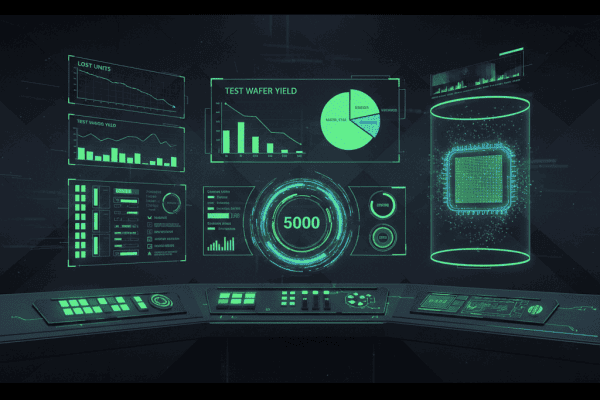
NeuroBox covers the full lifecycle: design automation, Smart DOE commissioning, and real-time production AI.
Explore Solutions →See how NeuroBox reduces trial wafers by 80%
From Smart DOE to real-time VM/R2R — our AI runs on your equipment, not in the cloud.
Book a Demo →